RAGDOLL STANDARDS
In our cattery, we meticulously select our kings and queens from reputable breeders across different countries (US, Italy, Poland, etc). Each of our breeding cats undergoes comprehensive genetic testing for over 40 feline diseases, including hypertrophic cardiomyopathy (HCM), to guarantee the health and vitality of our litters.
According to the breed standard for Ragdolls (TICA & CFA), ragdolls are recognized for their pointed markings and blue eyes. Traditional Ragdolls come in a range of standard colors from birth such as seal, blue, chocolate, lilac, red, cream, etc..
OUR PATTERNS
In CharmingWTDolls cattery, our current breeding plan is currently producing seal/blue mitted kittens and seal/blue bicolor kittens. However, this year we welcomed a new King (red lynx pattern) which in the future might have red/cream colour kittens (stay tuned...).
 |
|---|
 |
 |
 |
 |
Seal Bicolor
 |
|---|
 |
 |
 |
 |
Seal Mitted
A Seal Bicolor Ragdoll has a warm ivory or fawn body that contrasts beautifully with crisp white markings on the face, paws, chest, and much of the tail. Their most distinctive feature is the white “V” shape on the face, which extends from the chin up between the eyes and across the forehead, often paired with a white nose blaze. The ears show dark brown seal coloring, usually edged with white, while the paws are white with darker brown “boots” rising up the backs of the legs. Their tail is mostly white with a dark brown tip, completing a balanced, eye-catching look that makes this pattern especially elegant and appealing.
 |
|---|
 |
 |
 |
 |
Blue bicolor
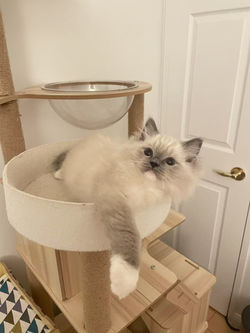
A Seal Mitted Ragdoll has rich, dark brown (seal) coloring on its points—ears, face, legs, and tail—along with a lighter brown body that can vary in shade based on genetics, diet, and environment. The “mitted” pattern means the cat has white mitts on the paws, a white chin, usually a white chest, and a distinct white pattern on the stomach. If the chin is dark instead of white, the cat is considered mismarked, which can happen. Seal mitted Ragdolls are known for their striking contrast, and features like a white blaze can make them even more visually impressive.
 |
|---|
 |
 |
 |
 |
Blue Mitted
The Blue Bicolor Ragdoll is set apart by several distinctive features that give it a soft yet striking appearance. Its pointed areas—the ears, face, and tail—are a beautiful blue-gray color, with the back (or saddle) also lightly shaded in blue, though paler than the points. A hallmark of this pattern is the inverted white “V” mask on the face, ideally symmetrical according to the breed standard. Blue Bicolors are also well known for their adorable pink nose, which enhances their gentle expression. Among all Ragdoll patterns, the bicolor has the most white, with white prominently appearing on the face, belly, and legs, creating a bright and elegant contrast.
 |
|---|
Blue Lynx Bicolor -- RARE
A Blue Mitted Ragdoll has a soft silvery-blue or bluish-gray body paired with darker blue points on the ears, face, paws, and tail. The mitted pattern adds white mittens on the front paws, often white socks on the hind legs, and may include white on the chin and chest. Their face features a gentle blue mask that highlights their striking blue eyes, while the ears and tail are a deeper blue, with the tail often showing subtle ringed shading and a darker tip. This elegant combination of cool blue tones, crisp white markings, and calm expression gives the Blue Mitted Ragdoll a serene, refined, and highly captivating appearance.
 |
|---|
 |
 |
 |
Seal Lynx Bicolor
A Blue Lynx Bicolor Ragdoll is a large, gentle, and highly affectionate cat known for its relaxed, “floppy” temperament and people-loving nature. This striking variety features a soft silvery-blue body paired with darker blue-gray lynx (tabby) striping on the points, including the ears, face, legs, and tail. One of its most recognizable traits is the crisp white inverted “V” on the face, which frames the eyes and muzzle, along with extensive white on the chest, belly, and legs—hallmarks of the bicolor pattern. The lynx pattern adds delicate striping, an “M” marking on the forehead, and subtle rings on the tail, giving the cat extra depth and character compared to solid-point colors. Combined with their vivid blue eyes, plush coat, and calm, affectionate personality, Blue Lynx Bicolor Ragdolls are both visually stunning and wonderful companions. Due to the need for both the lynx gene and the bicolor pattern to align correctly, this color and pattern combination is relatively rare to breed, making them especially sought after among Ragdoll enthusiasts.
 |
|---|
Red Lynx Bicolor -- RARE
A Cream Bicolor Ragdoll features a soft pale, creamy ivory body that provides a gentle backdrop for the classic bicolor pattern. Cream is the dilute form of red (flame), meaning the color appears lighter and more subtle, giving these cats a warm, pastel appearance. The bicolor pattern includes darker cream points on the ears, face, paws, and tail, balanced by a large amount of white across the body. On the face, Cream Bicolor Ragdolls display a mask-like pattern with deeper cream shading around the eyes and nose, often forming the signature inverted white “V” that defines the bicolor look. Their ears match the warm cream tone of the points, blending beautifully with the body color. Their deep blue eyes stand out vividly against the light coat, adding to their soft, enchanting expression. The paws typically show darker cream coloring with white mittens on the front legs and often white boots on the hind legs, while the tail is a deeper cream with subtle ringed shading and a darker tip. Overall, the Cream Bicolor Ragdoll combines delicate coloration, elegant contrast, and the breed’s well-known gentle, affectionate temperament, making them both visually captivating and loving companions
A Seal Lynx Bicolor Ragdoll blends the breed’s famously gentle, floppy, and affectionate temperament with bold tabby (lynx) striping in rich seal brown on the points, including the ears, face, legs, and tail. Their coat features a predominantly white body accented by a clean inverted white “V” on the face, which beautifully frames their deep blue eyes and enhances the contrast of the dark lynx markings. The lynx pattern adds distinctive details such as an “M” on the forehead, defined facial striping, and ringed tails, giving each cat a unique and expressive appearance. Seal Lynx Bicolors are large, slow-maturing cats that can take up to four years to reach their full size and develop their complete coloration.
 |
|---|
 |
 |
 |
 |
Tortie
A Tortie Ragdoll displays a beautiful blend of red or cream mixed with a base color, creating distinctive patches or mottling on the points (ears, face, legs, and tail). Common Tortie color combinations include Seal Tortie (dark seal brown with red patches), Blue Tortie (soft slate gray mixed with cream), Chocolate Tortie (warm milk-chocolate with red), Lilac Tortie (pale lavender-gray with delicate cream highlights), Cinnamon Tortie (reddish-brown blended with red), and Fawn Tortie (soft beige with cream patches). These color mixes appear randomly, meaning no two Tortie Ragdolls ever look the same, making each cat truly unique. Tortie coloring occurs almost exclusively in females due to genetics and can appear in any Ragdoll pattern, such as colorpoint, mitted, or bicolor. Some Tortie Ragdolls also carry the lynx (tabby) gene, resulting in a Torbie Ragdoll, which combines tortoiseshell patches with subtle tabby striping for even more visual complexity. Known for both their striking appearance and affectionate temperament, Tortie Ragdolls are among the most eye-catching variations of the breed.